
Indian OTT platforms are increasingly moving away from standard police procedurals and small town crime sagas. The latest addition to this shift is the dil padosi web series review, a show that dives deep into the quiet cracks of domestic life. Premiering on 15 October 2026 as part of the Shemaroo Premiere lineup, this six episode drama produced by Victor Tango Entertainment attempts to bridge the gap between traditional values and modern relationship dynamics.
Unlike many soaps that rely on high stakes melodrama, Dil Padosi focuses on the uncomfortable silence between partners. It asks a haunting question: What happens when the life you want is just one wall away from the life you have?
The Premise: One Wall, Two Worlds
Set in a quiet residential colony, the story centers on Mohak (Jai Talwar) and Manjari (Shivaani M Singh). To the outside world, they are the ideal married couple. They follow a set routine, maintain their household, and present a stable front. However, beneath this polished surface lies a growing emotional distance. Neither partner is ready to admit that the spark has faded until new neighbors move in next door.

Enter Diya (Nyrraa M Banerji) and Ronak (Pranav Kumaarr). This younger, vibrant couple operates on a completely different frequency. They are open, modern, and notably, they live by a different set of rules involving an open relationship. Their arrival acts as a catalyst, forcing Mohak and Manjari to confront the desires they have suppressed for years. The show uses the physical proximity of the neighbors to highlight the emotional proximity of temptation.
Character Deep Dive: The Traditional vs. The Modern
The strength of Dil Padosi lies in its character contrasts. The writers have carefully crafted four distinct personalities that represent different stages of emotional awakening.
- Mohak (Jai Talwar): He is the man caught in the middle. He values his social standing and the comfort of his marriage but feels an undeniable pull toward the freedom he sees next door.
- Manjari (Shivaani M Singh): A homemaker who has lost her identity in the service of others. Her arc is perhaps the most relatable, focusing on the moment a woman realizes she is no longer being “seen” by her partner.
- Diya (Nyrraa M Banerji): The unapologetic boss lady. She is ambitious and self assured, serving as the foil to Manjari’s quiet nature.
- Ronak (Pranav Kumaarr): An influencer and chef who brings spontaneity to the neighborhood. His character represents the allure of a life lived without rigid boundaries.

Relationship Comparison Table
| Feature | Mohak and Manjari | Diya and Ronak |
|---|---|---|
| Relationship Style | Traditional / Monogamous | Modern / Open |
| Communication | Suppressed / Hidden | Transparent / Vocal |
| Lifestyle | Routine / Disciplined | Spontaneous / Creative |
| Core Conflict | Emotional Distance | External Judgment |
Performance Review: Nyrraa M Banerji and Ensemble
Nyrraa M Banerji delivers a standout performance as Diya. Moving away from her usual roles, she brings a grounded confidence to this character. She avoids making Diya a caricature of a “modern woman,” instead giving her layers of ambition and self awareness. Her chemistry with Pranav Kumaarr is electric, providing the necessary contrast to the stagnant marriage next door.
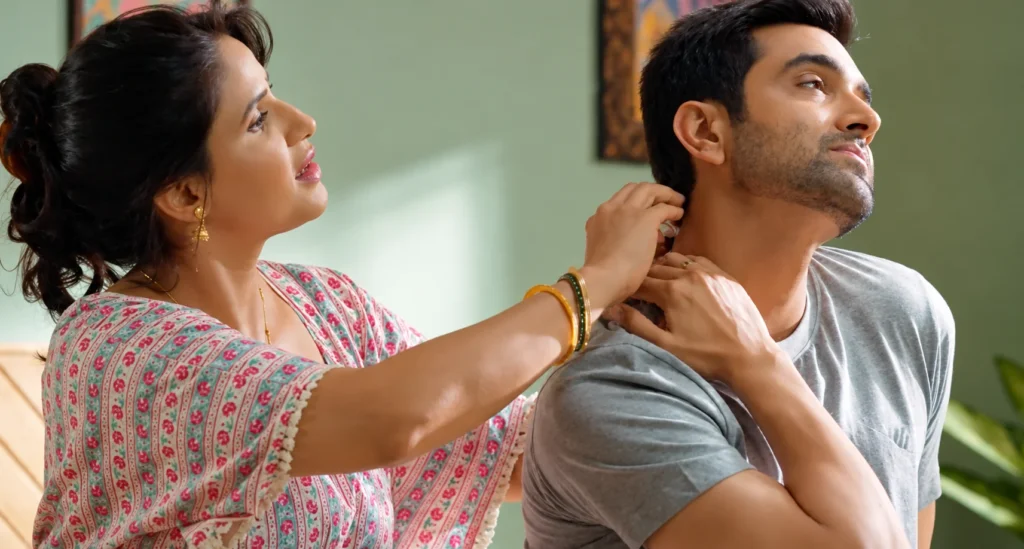
Shivaani M Singh is equally impressive. She captures the subtle pain of being ignored with great finesse. In the scenes where Manjari begins to realize her own worth, Shivaani shines through her expressions rather than loud dialogue. Jai Talwar plays Mohak with a restrained intensity, effectively conveying a man who is terrified of his own changing desires. Finally, Pranav Kumaarr adds much needed lightness and charm, making Ronak a character you want to watch more of.
Also Read : Namita Krishnamurthy: The Full Biography of the IIT-Grad Star
Production and Direction: A Victor Tango Creation
Victor Tango Entertainment, known for their ability to handle nuanced human stories, manages to keep the pacing tight. With only six episodes, there is very little filler. The cinematography uses the small town colony setting to create a sense of intimacy and claustrophobia simultaneously. The camera often lingers on the wall separating the two apartments, symbolizing the barrier between the lives these characters lead and the lives they covet.

The use of Ronak’s profession as a chef allows for a sensory experience, where food becomes a metaphor for hunger and desire. The dialogue is sharp and avoids being overly preachy, allowing the audience to judge the characters for themselves rather than being told who is right or wrong.
Is Dil Padosi Worth Your Time?
If you are looking for a show that explores the psychological aspects of infidelity and marital boredom without the typical TV tropes, then Dil Padosi is a must watch. It is a mature, layered drama that respects the intelligence of its audience. The show does not provide easy answers, which might frustrate viewers looking for a happy ending, but it offers a realistic look at modern intimacy.
Pros:
- Strong performances by the entire cast, especially Nyrraa M Banerji.
- Relatable themes of emotional neglect and mid life crisis.
- Compact storytelling with only 6 episodes.
Cons:
- The concept of an open relationship might be jarring for conservative audiences.
- Some subplots regarding Ronak’s influencer life could have been deeper.
Also Read : Namita Krishnamurthy: The Full Biography of the IIT-Grad Star
Frequently Asked Questions
Q.Is Dil Padosi based on a true story?
No, the series is a fictional drama created to explore contemporary relationship dynamics in urban and semi urban India.
Q.Can I watch Dil Padosi with family?
Due to its mature themes involving open relationships and temptation, it is best suited for an adult audience. Parental discretion is advised.
Q.Where can I watch Dil Padosi online?
The series is streaming exclusively on ShemarooMe as part of the Shemaroo Premiere collection.
Q.How many episodes are in Season 1?
There are a total of six episodes in the first season, all of which were released on 15 October 2026.