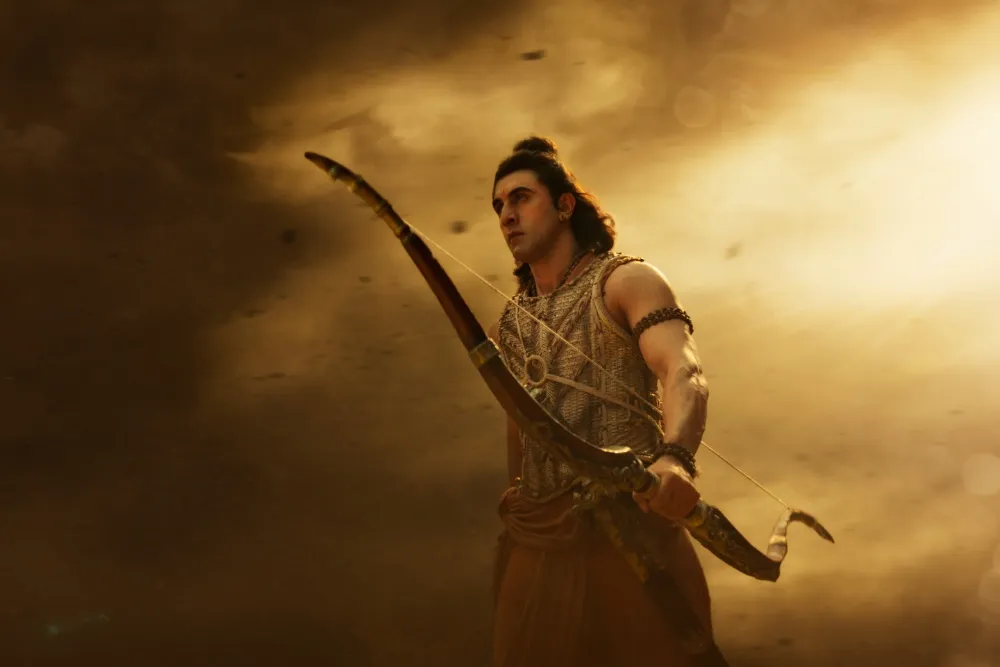
There has never been a film like this attempted in Indian cinema. Not in scope or ambition. Not in budget too. And when Ramayan Part 1 releases on Diwali 2026, it will either be the film that changes everything or the most expensive cautionary tale in the history of Indian filmmaking.
There is no middle ground here.
Ramayan Movie: What Is Actually Being Built
Directed by Nitesh Tiwari, the man behind Dangal, still the highest-grossing Indian film of all time, Ramayan is a two-part adaptation of Valmiki’s ancient Sanskrit epic. Part 1 releases Diwali 2026. Part 2 follows on Diwali 2027.
The combined budget, according to Variety, sits at approximately $500 million. In Indian terms, that’s nearly ₹4,000 crore. For context, Dhurandhar 2’s record run just crossed ₹1,700 crore globally. The film has to make back double that to be considered a success.
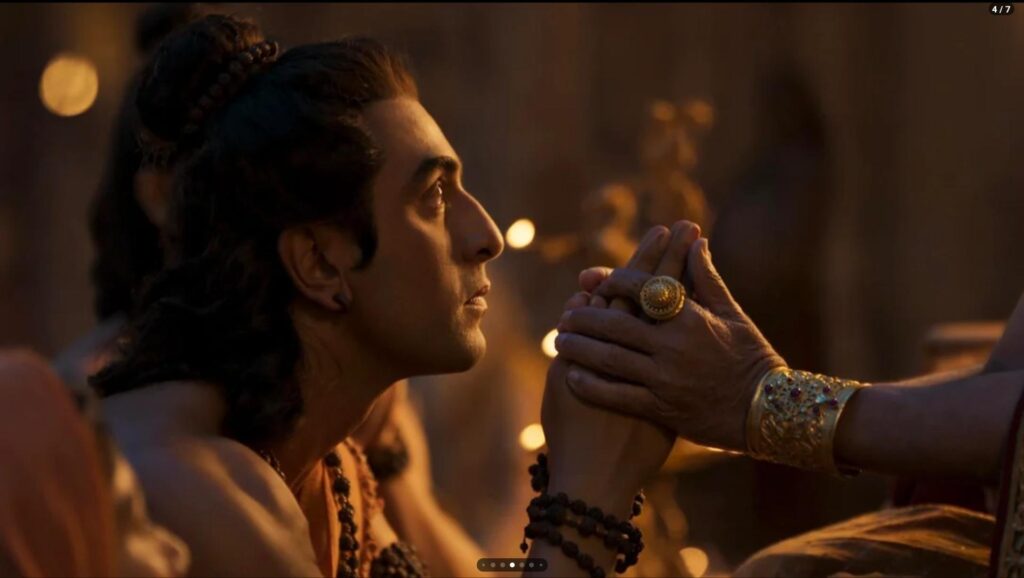
It is being shot entirely on IMAX 70mm film cameras, a format so demanding that even Christopher Nolan rarely uses it. The VFX is being handled by DNEG, the Oscar-winning studio behind Dune, Inception, and Oppenheimer. Action choreography comes from Terry Notary (Planet of the Apes, Avengers) and Guy Norris (Mad Max: Fury Road). The score is being composed by Hans Zimmer and A.R. Rahman, their first-ever collaboration.
Also Read: Dhurandhar 2 ₹1000 Crore: Hit or Hype? Truth Revealed
Ramayan Cast: India Has Dreamed Of
Ranbir Kapoor as Lord Ram. Yash, coming off the volcanic success of KGF as Ravana. Sai Pallavi as Sita. Sunny Deol as Hanuman. Ravi Dubey as Lakshmana. Amitabh Bachchan as Jatayu. Anil Kapoor as King Janak. Arun Govil, the original Ram from Ramanand Sagar’s iconic television adaptation as King Dasharath.
This is not a cast. This is a cultural event.
The choice of Ranbir Kapoor as Ram is deliberately divisive. He is not the obvious choice. He’s associated with urban, morally complicated characters Rockstar, Barfi, Animal. Making him the embodiment of dharmic righteousness is either a stroke of genius or a misread of what audiences want. Tiwari clearly believes the contrast can work. Ram as a man with genuine internal struggle, not just a symbol.
Yash as Ravana is the easy choice and for good reason. His physicality, his screen presence, and his ability to project menacing intelligence were on full display in KGF. But a one-dimensional Ravana would be the film’s biggest failure. Valmiki’s Ravana is among literature’s most complex antagonists: a scholar, a devotee of Shiva, a man who commits a catastrophic wrong out of a single unchecked desire. Whether Tiwari gives Yash the material to match that complexity will define the film.
The Ghost of Adipurush
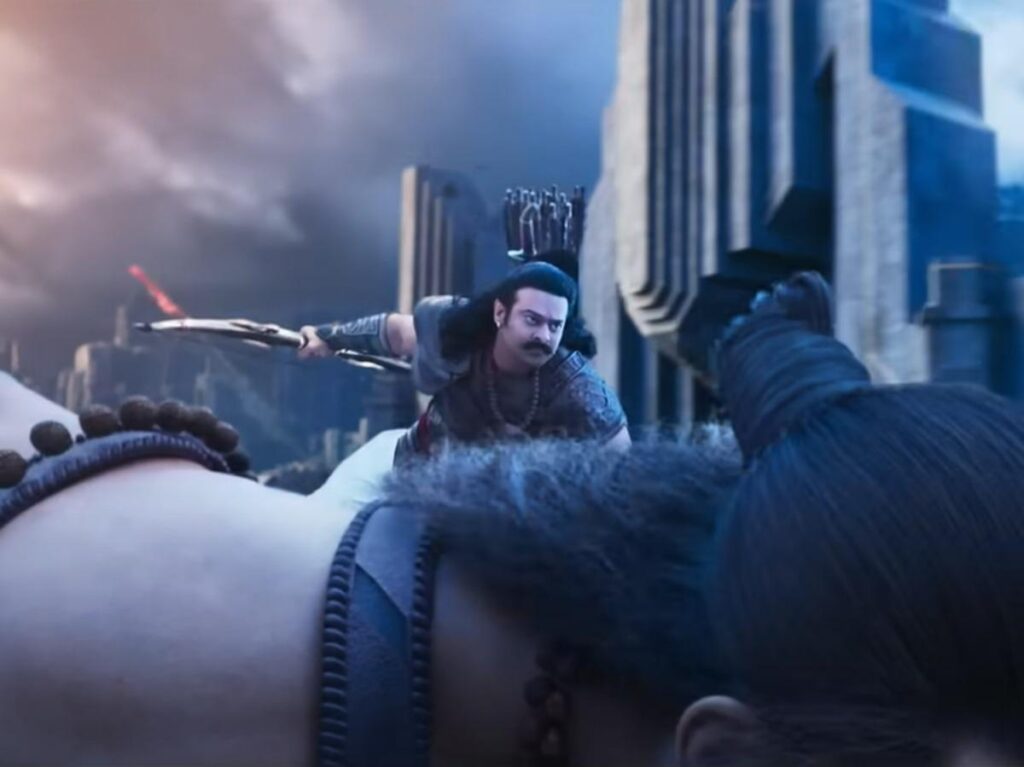
Nobody in this production is going to say the word ‘Adipurush’ in any interview. But everyone involved knows it is the shadow they are working under. Prabhas’s 2023 take on the Ramayan, made on ₹500 crore, was widely criticized as a CGI disaster. It became a meme. It became a warning. Its lazy visual language and cheap digital sets embarrassed an entire generation of filmmakers.
Tiwari and producer Namit Malhotra have been direct about this. They are building real sets. They are shooting across real locations in Morocco, Iceland, and across India. The creatures, the environments, the battles, they are being constructed with the ambition of something that has never been seen in Indian cinema.
What Happens If It Works
If Ramayan delivers, if it achieves the visual grandeur of Dune, the emotional weight of Dangal, and the cultural reverence the story deserves, it does something no Indian film has done before. It makes Indian mythology exportable. Not just to the diaspora, but to global audiences who have never encountered the Ramayan at all. The IMAX release strategy, the global distribution, the Hans Zimmer score, these are not Bollywood decisions. They are Hollywood decisions being applied to Indian cultural material.
Also Read: Amitabh Bachchan to Voice Jatayu in Ranbir Kapoor’s Ramayana
That is either beautiful or terrifying, depending on your relationship with the story.
The Ramayan isn’t just a film. It is a text that has shaped the spiritual, philosophical, and cultural identity of over a billion people across South and Southeast Asia. Treating it like an IP to be mined for franchise revenue would be a betrayal. Treating it as the foundational work of literature it is one that deserves the same cinematic scale as Homer or Tolkien could be transformative.
Diwali 2026. Watch this space.