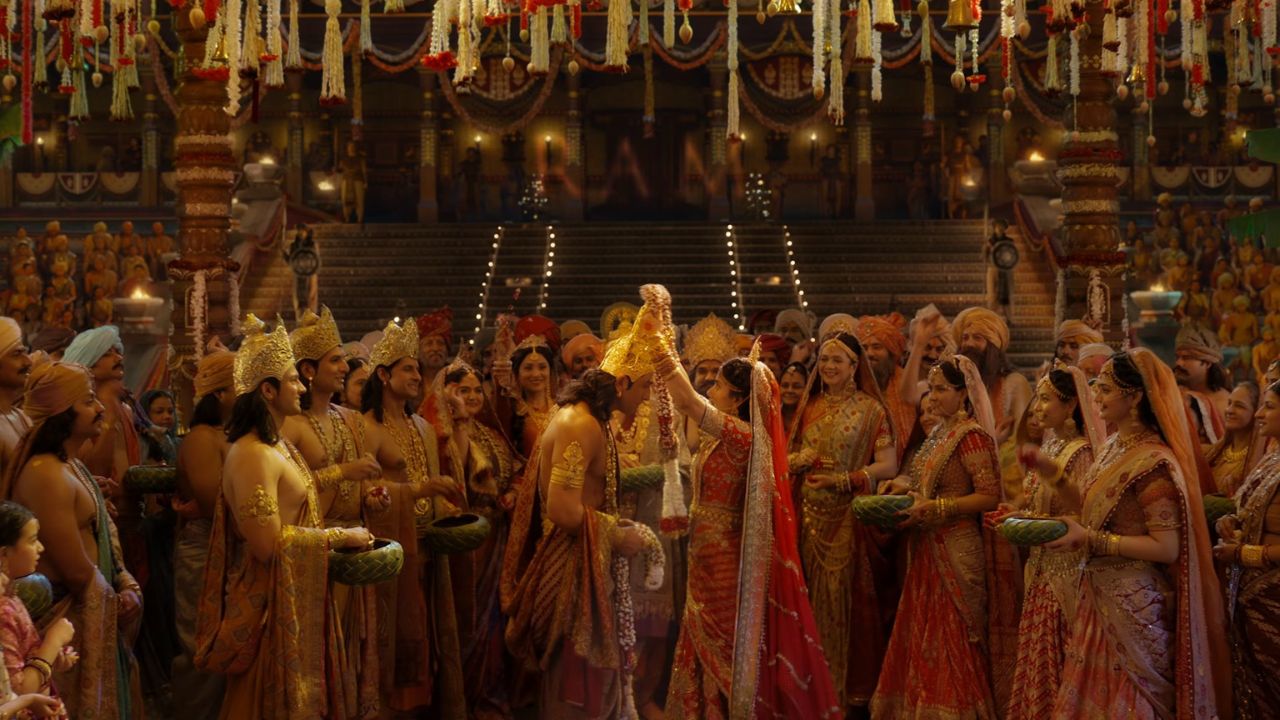
The Indian film industry is currently witnessing a financial shift of seismic proportions. Nitesh Tiwari’s upcoming adaptation of the Ramayana has captured global headlines not just for its star-studded cast, but for its unprecedented financial scale. With a reported combined budget of ₹4,000 crore, equivalent to approximately $500 million, this project is positioning itself as a legitimate contender on the international stage.
This is not merely a high-budget Bollywood film: it is a calculated attempt to compete with Hollywood franchises like Dune or Gladiator. The scale of investment has sparked intense debate among trade analysts and fans alike. How can a domestic production justify such a massive spend? The answer lies in the vision of producers Namit Malhotra and Yash, who are looking far beyond the traditional borders of the Indian box office.
Breaking Down the 500 Million Dollar Math
When the figure of ₹4,000 crore was first mentioned, many assumed it was the cost of a single film. However, recent clarifications from actor and co-producer Yash have shed light on the actual financial structure. This massive sum covers the entire ecosystem of the two-part epic.
The budget is divided into three primary pillars: production costs, cutting-edge visual effects, and a massive global marketing campaign. Yash explained during a recent media appearance on August 16, 2026, that the makers are following Hollywood math. In the Western film industry, the marketing and promotion budget often equals or exceeds the actual production cost. By allocating such a significant portion to global outreach, the team aims to ensure that Ramayana is treated as a worldwide event rather than a regional release.

The Two-Part Strategy: Why the Budget is Shared
One of the most critical aspects of this budget is that it is shared across two distinct cinematic installments. Producing both parts simultaneously or in close succession allows the production to save on overhead costs, such as set construction and talent contracts.
- Part 1 Focus: Establishing the world of Ayodhya, the exile, and the introduction of key characters.
- Part 2 Focus: The grand war, the journey to Lanka, and the ultimate resolution.
By spreading the ₹4,000 crore over two films, the effective cost per movie becomes ₹2,000 crore. While this is still significantly higher than any previous Indian film, it makes the break-even point slightly more manageable when considering the combined revenue potential of both releases.
Cast Salaries: What Ranbir Kapoor and Yash Bring to the Table
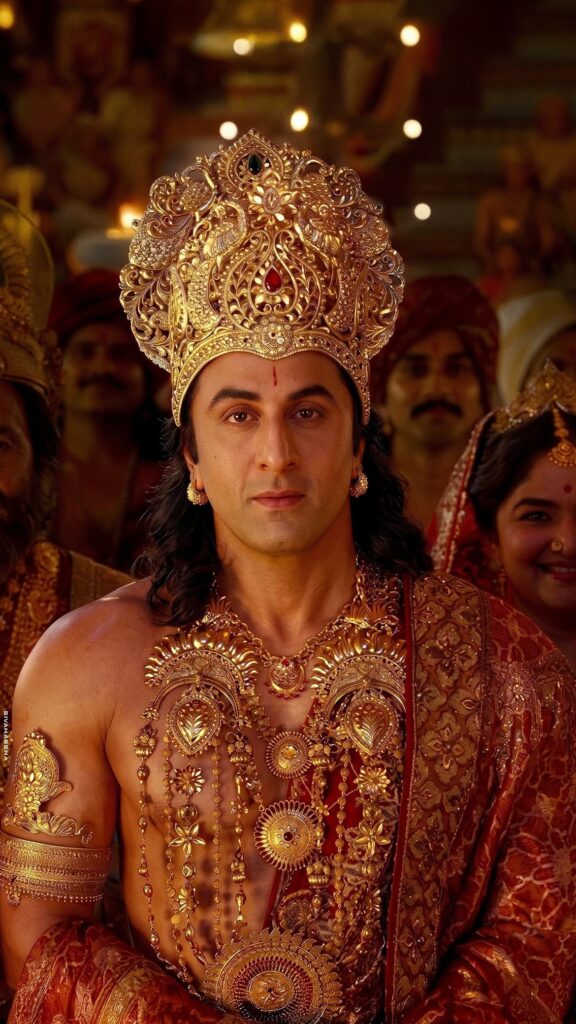
A significant portion of any tentpole film budget is dedicated to its lead actors. For Ramayana, the producers have secured some of the biggest names in the country. Ranbir Kapoor stars as Lord Rama, while Sai Pallavi portrays Sita. The antagonist, Ravana, is played by the Kannada superstar Yash, who also serves as a co-producer on the project.
While official contracts are rarely made public, trade reports suggest that the lead actors are receiving substantial fees that reflect their market value. Ranbir Kapoor’s dedication to the role has been widely documented, including reports of him undergoing physical transformations and voice training. Yash, coming off the massive success of the KGF franchise, brings significant box-office pull in the South Indian markets, ensuring the film has pan-India appeal from day one.
VFX and DNEG: The Massive Technical Investment
Perhaps the most expensive line item in the Ramayana movie budget is the visual effects. Namit Malhotra, the CEO of DNEG (a world-renowned VFX house), is the driving force behind the film’s production. DNEG has won multiple Academy Awards for their work on films like Inception and Dune, and they are bringing that same level of expertise to this epic.
The goal is to move away from the criticized CGI seen in previous attempts at the epic and instead create a photo-realistic, immersive world. This requires thousands of artists and years of rendering time. The investment in technology is not just for the spectacle; it is a long-term asset. The digital assets created for Part 1 can be reused and refined for Part 2, creating a cohesive visual language that rivals any global blockbuster.
Global Marketing: Adopting the Hollywood Revenue Model
As Yash noted in his recent explanation, the revenue for this film is intended to be global. The producers are not just relying on the Indian theatrical run to recover their ₹4,000 crore investment. They are targeting international markets where Indian epics have historically had limited reach but high potential.
This strategy involves:
- High-Profile Distribution: Partnering with major international studios for a wide release in North America, Europe, and East Asia.
- Multilingual Branding: Ensuring the film is dubbed and marketed with the same intensity as a Marvel or DC production.
- Soft Power: Using the cultural depth of the Ramayana to appeal to global audiences interested in mythological storytelling.
Comparing Ramayana to Previous Indian Blockbusters
To understand the sheer scale of the Ramayana movie budget, it is helpful to compare it to other landmark films in Indian cinema.
| Movie Title | Estimated Budget (INR) | Primary Focus |
|---|---|---|
| Ramayana (Part 1 & 2) | ₹4,000 Crore | Global VFX & Marketing |
| Kalki 2898 AD | ₹600 Crore | Sci-Fi & Star Power |
| RRR | ₹550 Crore | Action & Period Drama |
| Brahmastra | ₹410 Crore | VFX & Franchise Building |
| Adipurush | ₹500 Crore | Performance Capture |
As the table shows, Ramayana is in a league of its own. It represents a jump of nearly six times the budget of the previous record-holders. This indicates a massive vote of confidence in the scalability of Indian stories for a global audience.
Can the Producers Recover ₹4,000 Crore?
The primary concern for trade analysts is the recovery of such a colossal sum. A budget of ₹4,000 crore implies that the two films combined need to earn significantly more than ₹8,000 crore at the worldwide box office to be considered profitable, after accounting for distributor shares and taxes.
However, the revenue streams are diverse:
- Theatrical Rights: The primary source, expected to break records in India and overseas.
- Streaming Rights: Massive deals with platforms like Netflix or Amazon Prime Video are expected to fetch hundreds of crores.
- Satellite Rights: Television broadcasting remains a lucrative market in India.
- Merchandising and Gaming: Given the epic nature of the story, there is potential for significant revenue through ancillary products.
Release Timeline and Future Outlook
The journey for this epic has already begun. Part 1 of Ramayana is currently scheduled for a global release on November 6, 2026, strategically timed to coincide with the Diwali season. This window is traditionally the most profitable period for Indian cinema. Part 2 is expected to follow in 2027, maintaining the momentum generated by the first installment.
The success of the Ramayana movie budget will likely determine the future of Indian cinema. If the film succeeds in its global ambitions, it will open the doors for more high-investment, culturally significant projects. It represents a bold step forward, moving away from the safety of domestic success and reaching for a seat at the table of global entertainment.
The Ramayana movie budget is a testament to the growing ambition of Indian filmmakers. By investing ₹4,000 crore into a two-part epic, Nitesh Tiwari, Namit Malhotra, and Yash are challenging the traditional boundaries of cinema. Whether this massive gamble pays off will depend on the film’s ability to resonate with both Indian fans and international viewers. As we approach the November 6, 2026 release date, the world will be watching to see if this “Hollywood math” leads to a new era of global success for Indian stories.

Frequently Asked Questions
Q. Is Ramayana the most expensive Indian movie ever made?
Yes, with a combined budget of ₹4,000 crore for both parts, it is the most expensive project in the history of the Indian film industry, surpassing previous records held by films like Kalki 2898 AD and RRR.
Q. Why is the Ramayana budget so high?
The budget is high because it includes top-tier VFX by DNEG, a star-studded cast with high salaries, and a massive global marketing and promotion strategy similar to Hollywood productions.
Q. Who is playing Ravana in the new Ramayana movie?
The Kannada actor Yash, known for his role in the KGF series, is playing the role of Ravana. He is also a co-producer of the film.
Q. When is Ramayana Part 1 releasing?
Ramayana Part 1 is scheduled to release worldwide on November 6, 2026.
Q. Will the movie be released in multiple languages?
Yes, the film is being designed as a global product and will be released in Hindi, Tamil, Telugu, Malayalam, and Kannada, along with several international languages to cater to a worldwide audience.