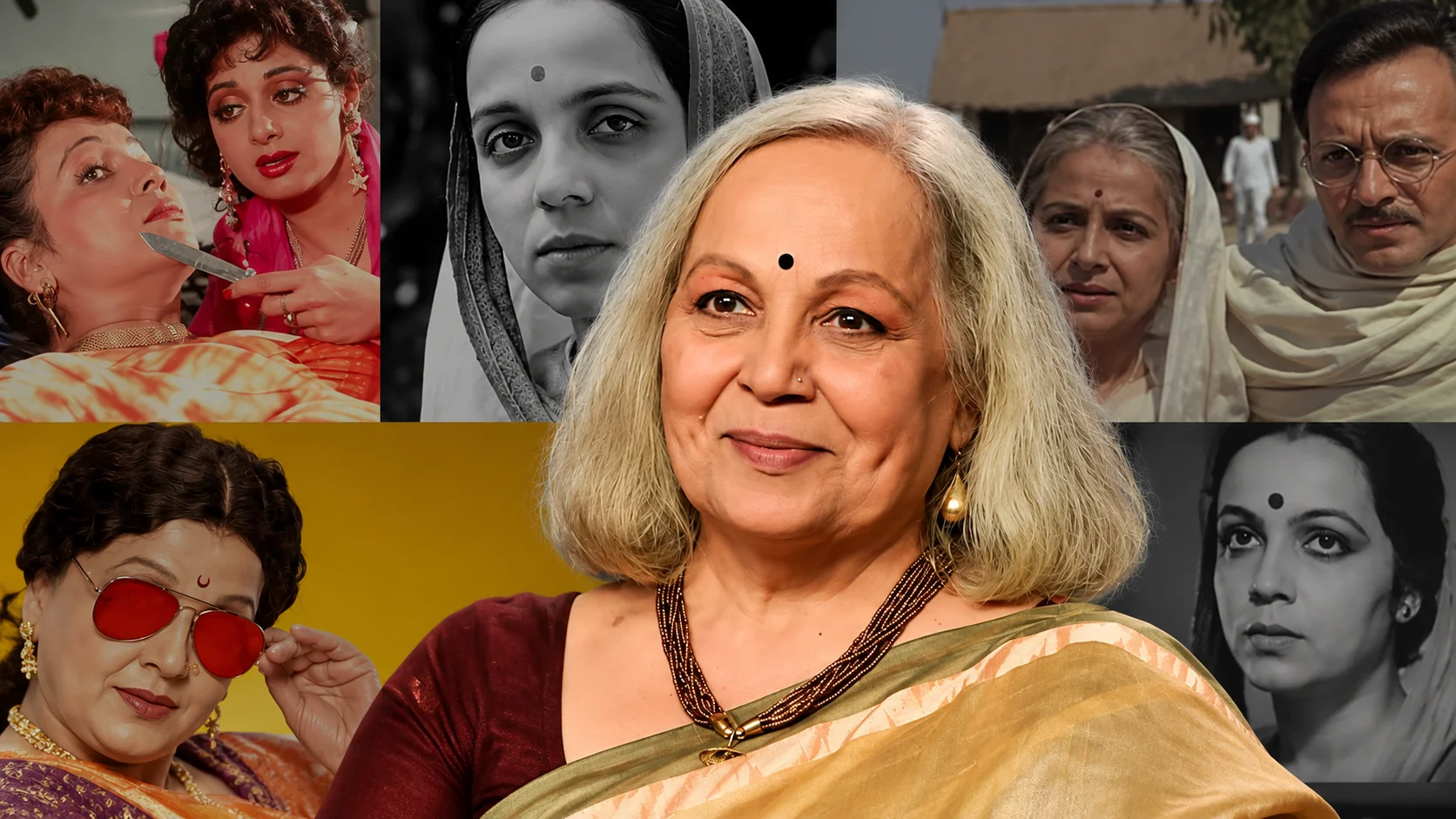
In the grand history of Indian cinema, many names shine bright on the global stage. However, one specific distinction remains held by a single individual. Rohini Hattangadi is the only Indian actress to have won the prestigious BAFTA Award for Best Actress in a Supporting Role.
Her victory at the 36th British Academy Film Awards for her portrayal of Kasturba Gandhi in the 1982 film Gandhi was not just a personal achievement. It was a moment that put Indian acting methods under a global spotlight. Even as contemporary stars like Alia Bhatt and Priyanka Chopra make waves internationally, Hattangadi remains the pioneer who first broke through this specific barrier.
The 1983 BAFTA Milestone: A Historic Victory
Winning a BAFTA is a monumental task for any performer, but for an Indian actress in the early eighties, it was nearly unprecedented. Rohini Hattangadi achieved this feat for her soul-stirring performance alongside Ben Kingsley.
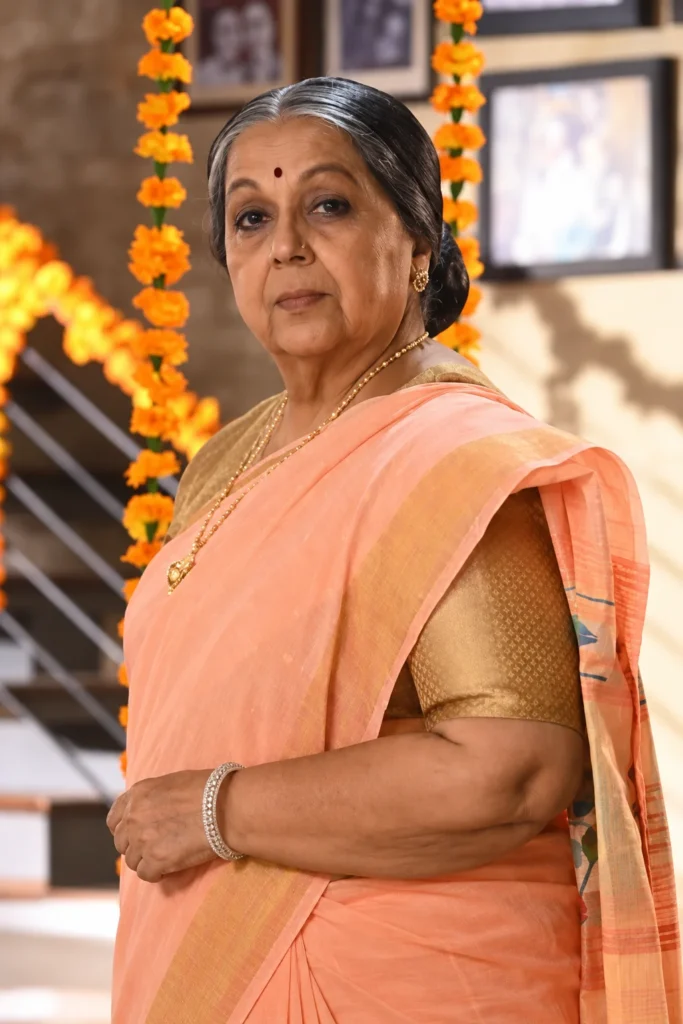
She faced stiff competition but emerged victorious, solidifying her place in history on 20 March 1983. Her portrayal of Kasturba was noted for its quiet strength and aging realism. Interestingly, Hattangadi was only 27 years old when she took on the role of the elderly Kasturba. She underwent rigorous screen tests and used her background in theatre to master the nuances of a woman who ages over several decades on screen.
Early Life and the Influence of Theatre
Born as Rohini Oak on 11 April 1951 in Pune, her journey did not begin in front of a camera. Her father, Anant Oak, was a firm believer that true acting was forged on the stage. Following this philosophy, she joined the National School of Drama (NSD) in New Delhi in 1971.
At NSD, she was trained by the legendary Ebrahim Alkazi. This was also where she met her husband, Jayadev Hattangadi. The couple became a powerhouse of Indian theatre. While Rohini won the Best Actress award upon graduation in 1974, Jayadev was recognized as the Best Director. Together, they founded the Marathi theatre group Awishkar, which eventually produced over 150 plays.
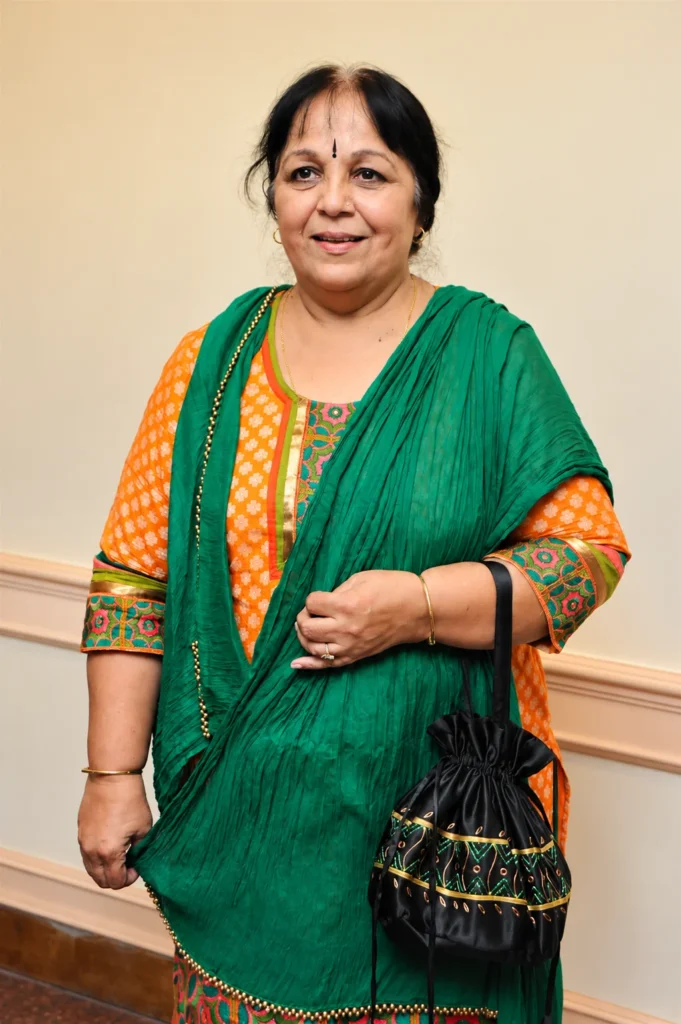
Her training was diverse. She spent over eight years learning Kathakali and Bharatanatyam. Furthermore, she broke cultural boundaries by becoming the first woman to perform in a Japanese Kabuki play titled Ibaragi, directed by Shozo Sato.
The Paradox of Kasturba: A Career-Defining Challenge
While Gandhi brought international fame, it created a unique professional obstacle. Because she played an elderly woman so convincingly, the Indian film industry began to view her through that lens.
Director James Ivory reportedly considered her for a role in Heat and Dust but changed his mind after meeting her in person. He was shocked to find she was a young woman in her late twenties, as he had assumed she was actually the age of the character she played in Gandhi. This resulted in her being frequently cast in motherly roles throughout the eighties, often playing characters significantly older than her actual age.
Comparison: Theatre Performance vs. Commercial Cinema
Rohini Hattangadi often noted that while cinema provided financial stability, theatre provided the artistic soul. The following table highlights the differences in her approach to both mediums:
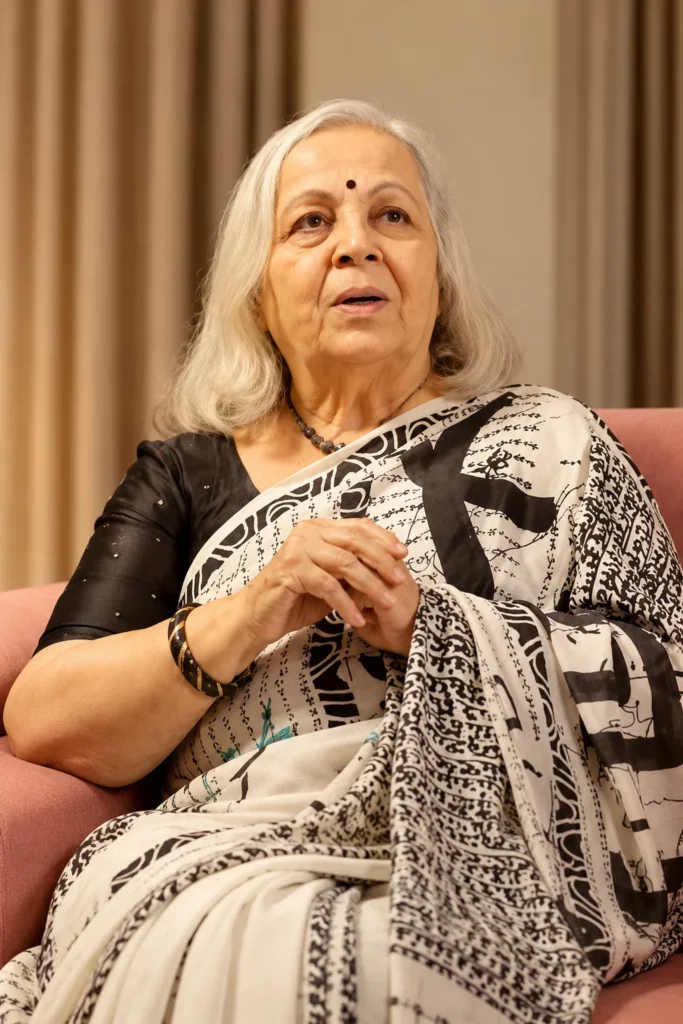
| Feature | Theatre Approach | Cinema Approach |
|---|---|---|
| Focus | Experimental and folk forms like Yakshagana. | Realistic character portrayals and motherly roles. |
| Key Awards | Sangeet Natak Akademi Award (2004). | BAFTA, National Award, and Filmfare. |
| Physicality | Dynamic movements learned from Kathakali. | Intense facial expressions and aging make-up. |
| Notable Work | The solo-act play Aparajita. | Gandhi, Arth, and Saaransh. |
Life Beyond Gandhi: Typecasting and Resilience
Despite the mother roles, Hattangadi proved her range in the parallel cinema movement. Her work in Mahesh Bhatt’s Arth (1982) earned her a Filmfare Best Supporting Actress Award. She also won a National Film Award for her performance in Govind Nihalani’s Party (1984).
In mainstream Bollywood, she is fondly remembered for her roles in films like Chaalbaaz and Agneepath. In the latter, she played the mother of Amitabh Bachchan, despite being much younger than him. This ability to command authority and maternal grace became her trademark in Hindi cinema.
Also Read : Namita Krishnamurthy: The Full Biography of the IIT-Grad Star
Recent Contributions and Television Legacy
In the 2000s, Hattangadi transitioned seamlessly into television. She became a household name in Maharashtra through the long-running serial Char Divas Sasuche, which held a Guinness World Record for its number of episodes at one point.
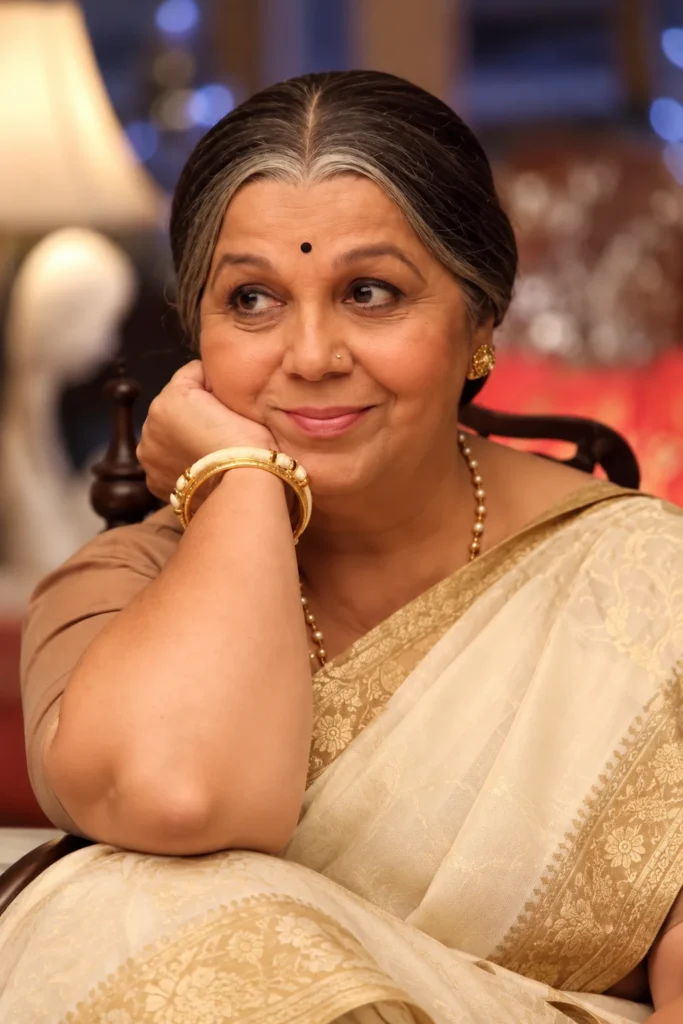
Even today, she remains active. She continues to engage in her hobby of gardening at her home and is frequently seen in Marathi television projects and experimental stage plays. Her son, Aseem Hattangadi, carries on the family legacy as a theatre actor. Following the passing of her husband Jayadev in December 2008, she has continued to support the arts through their center, Kalashray, which focuses on research and education for the underprivileged.
Also Read : Meethe Mein Kya Hai Release Date, Cast & Plot
Frequently Asked Questions
Q. Is Rohini Hattangadi the only Indian to win a BAFTA?
She was the first Indian and remains the only Indian actress to win the BAFTA for Best Supporting Actress. Other Indians like Bhanu Athaiya have won Oscars, but this specific BAFTA category is unique to her.
Q. How old was she when she filmed Gandhi?
She was 27 years old when she played the role of Kasturba Gandhi, who ages significantly throughout the film.
Q. What was her first film?
She made her debut in the 1978 film Arvind Desai Ki Ajeeb Dastaan, directed by Saeed Akhtar Mirza.
Q. Which classical dances is she trained in?
She has over eight years of training in Kathakali and Bharatanatyam.