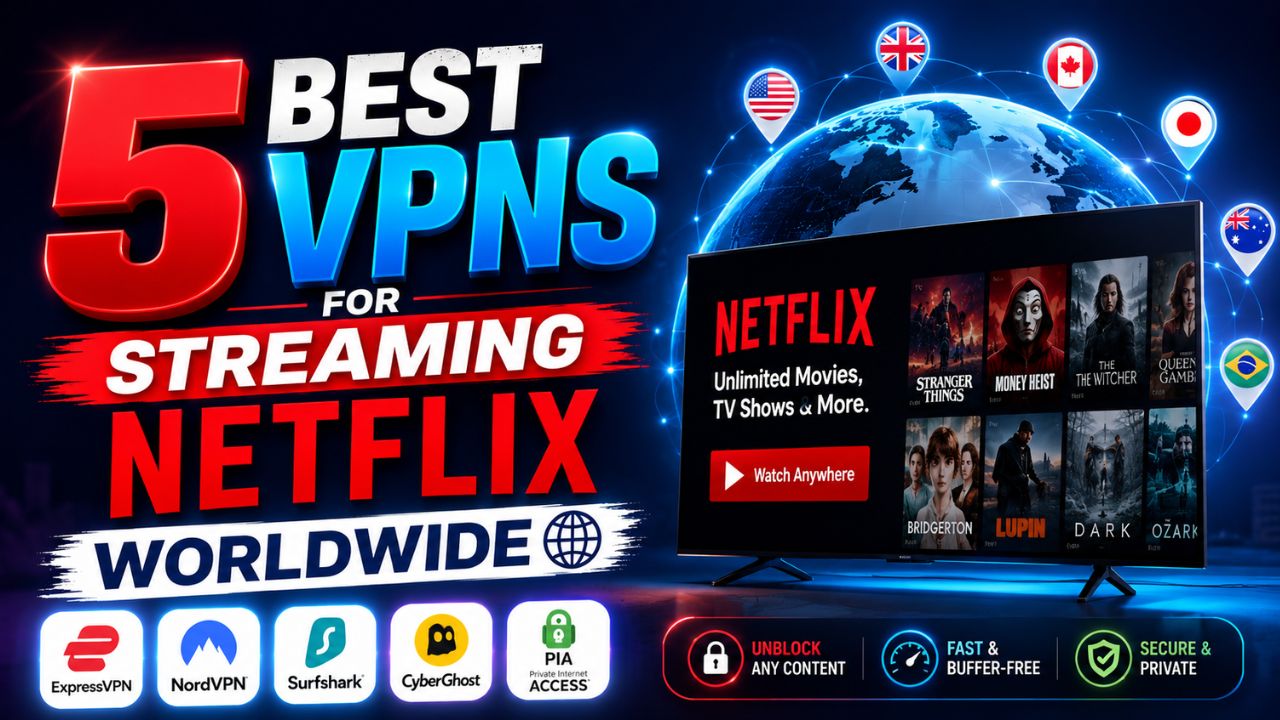
The promise of the internet was a library without walls, a digital Alexandria where every film and every show would be available to every person at the tap of a screen. It is a promise that was broken almost immediately. The walls came up, not of brick and mortar, but of regional licensing agreements, turning the World Wide Web into a patchwork of digital fiefdoms.
This is the landscape we inherit: a world where the Netflix catalog you see in a Parisian apartment is a ghost compared to the one available in a New York loft, and both are entirely different from the one in Seoul.
The most profound statement of our current internet reality is that a Virtual Private Network is the skeleton key required to access the full breadth of content the world has to offer. But the act of finding a VPN that can reliably outsmart Netflix is a strange and often frustrating quest, one that feels less like a purchase and more like a test of trust.
This is a battle fought in the shadows of server farms. A 2026 review by CNET astutely points out that the entire situation is a ‘cat-and-mouse game’ between the world’s largest streaming platform and the services trying to open it. Netflix, bound by its contracts, actively blocks known VPN server IP addresses.
A service that flawlessly unblocks a library today might be rendered useless tomorrow, only to be resurrected by its provider a week later. This constant, invisible war is the filter through which all recommendations must pass. The question is no longer simply about speed or cost; it is about reliability and the character of the provider in this ongoing siege.
I write this not as a technical reviewer obsessing over encryption protocols, but as a critic of the experience. The best VPN is one you forget is there. It must be the silent, transparent partner that does its job and then disappears into the background, leaving only the story on the screen behind.
What follows is a personal, critical evaluation of the services that have earned the right to be your key to the world’s content library. I have evaluated them not just on their spec sheets, but on the fundamental honesty of their performance. Can they make you believe you are somewhere you are not? Can they do it without making you wait, stutter, or suffer?
Also Read: 4 Best AI Video Generators for Beginners in 2026
5. ExpressVPN: The Polished, Privileged Traveler
To begin with ExpressVPN is to begin with the industry’s gold standard, a service that wears its premium price tag like a bespoke suit. Its reputation is not unearned; it is, in many ways, the most elegant tool for the job. CNET’s editors named it the best VPN for Netflix overall in 2026, and my own experience mirrors their findings. It is a service defined by its seamlessness.
The performance is a quiet revelation. Connecting to a UK server to watch the latest BBC drama from my desk in Chicago felt less like activating a piece of software and more like a gentle, instantaneous shift in reality. The interface is so clean, so deliberately simple, that it fades from your mind moments after you click the “on” button.
This is its greatest achievement. In testing, ExpressVPN unblocked nearly every international library thrown at it, from France to South Africa to Japan, doing so with a consistently fast connection that supported 4K streaming without a stutter. Its own documentation is supremely confident, a testament to a product that has little to prove.
Yet, this excellence comes with a significant asterisk. ExpressVPN is expensive, a fact that every review mentions with a sigh of resignation. For the budget-conscious cinephile, this can feel like an unfairly high toll on the bridge to global cinema. Furthermore, ZDNET’s 2026 tests uncovered a more concerning flaw: its default US server sometimes fails to stream Netflix, and it struggles with some regional libraries.
This is the paradox of ExpressVPN. It is a supremely polished experience, but it is not a flawless one. It is the luxury sedan that occasionally requires a push-start, an object of immense quality that nonetheless commands a price that forces you to ask if the view is truly worth the toll.
4. NordVPN: The Powerful, Analytical Perfectionist
If ExpressVPN is the refined traveler, NordVPN is the brilliant engineer. Its approach to the cat-and-mouse game is not one of simple elegance but of overwhelming technical force. In the crucial metric of speed, a factor that determines whether your experience will be cinematic or a buffering nightmare, NordVPN is currently unmatched.
PCMag’s 2026 testing declared it the fastest VPN, with an astonishingly low 1.94% decrease in download speeds. In practical terms, this means a 4K stream will look like a 4K stream, not a mosaic of pixels slowly resolving into a human face.
This raw speed is a direct consequence of its proprietary NordLynx protocol, a piece of technology that feels less like a feature and more like a competitive weapon. It is built for bandwidth-intensive tasks, and streaming high-definition video is the ultimate test of that. The server network is vast, a sprawling empire of over 110 locations that offers a dizzying array of options for country-hopping. Like ExpressVPN, it has been shown to reliably unblock major streaming services, a critical piece of the puzzle.
The trade-off for this raw power is a slight but noticeable friction in the user experience. Its Apple TV app has been described as “clunky,” a small but irritating flaw in a premium product. The sheer density of its features, while a boon for the privacy-obsessed, can feel like an unneeded layer of complexity for someone whose primary goal is a quiet evening of streaming international cinema.
NordVPN is the tool for the person who wants to look under the hood, who wants the absolute assurance of the fastest possible connection and the most expansive map. It is a VPN that is less interested in being invisible and more interested in being the most capable machine in the room.
3. Proton VPN
A great film is not judged solely by its two leads; the supporting cast gives a story its texture and depth. The VPN market in 2026 offers a rich ensemble of specialized tools, each making a compelling case for a particular kind of viewer.
Proton VPN is the one I would recommend to a family member who is not technically inclined but still values a fair deal. It offers the best free tier in the industry, a truly remarkable commitment that includes no data limits.
Its paid version unblocked Netflix in every region PCMag tested, a feat of consistency that earned it deep trust. Proton VPN feels like an honest, principled service, and its presence on this list is a testament to the idea that a company can be both ethical and effective.
2. CyberGhost VPN
It is the appliance of the bunch, a service optimized for simplicity. It features dedicated servers labeled by their streaming task, eliminating the guesswork for a newcomer. Click the “Netflix US” server, and it connects.
This is a profound user-experience innovation that makes it the ideal choice for a technophobe or a grandparent who just wants to watch a show from the old country. PCMag highlights its ease of use and dedicated streaming servers as its defining feature. It is not the fastest or the most powerful, but it may be the kindest to the uninitiated.
1. Private Internet Access (PIA)
It is the scholar in the corner. Its true value is unlocked through a dedicated IP option, a feature that can be a magic bullet against the constant blocks Netflix throws up.
A 2026 test found that after a short “reputation warm-up,” a PIA dedicated IP streamed 4K Netflix with zero proxy errors, a stark contrast to the shared servers that are constantly locked in a cat-and-mouse game. This is a more technical solution for a more dedicated problem, the ultimate tool for a digital nomad who will not take no for an answer.
The Verdict: The Key That Fits Your Lock
Choosing a VPN for streaming in 2026 is an act of self-discovery. It is a question of which compromises you are willing to make in the service of a wider world of stories. If you want the most polished, effortless, and transparent experience and you are willing to pay a premium for it, ExpressVPN remains the critic’s choice. If you are a performance purist who demands the lowest possible speed loss for flawless 4K streaming, NordVPN and its superior engineering is your destination.
For the budget-conscious, the privacy-focused, or the simply curious, Proton VPN offers a path into this world that is both noble and highly functional. And for the user who is overwhelmed by it all and wants a single button that says “Netflix UK,” CyberGhost VPN provides a level of thoughtful simplicity that is a form of genius in itself.
The great critic Roger Ebert often spoke of film as an empathy machine, a device that lets you walk in another person’s shoes and live another life for a few hours. A great VPN, in its purest form, is a gateway to that machine. It does not just bypass a geo-block; it unlocks a culture, a new perspective, a story that was not meant for your eyes but is now yours to cherish.
In an age where the internet can feel increasingly small and partitioned, this is a service of profound human value. Choose the key that fits your life, unlock the door, and let the world in.