You don’t watch a show like The Boys for comfort. For five seasons, Eric Kripke’s adaptation of Garth Ennis’s comic has been a corrosive, deeply angry howl against power, a superhero story that hates superheroes, an American fable convinced America is a lie. The series finale, “Blood and Bone,” had one job: to honor that anger while finding something resembling closure. It mostly succeeds, but in ways that have already split its audience right down the middle.
The date circled on every fan’s calendar finally arrived on May 20, 2026. After seven years and 55 million viewers tuning in for the final season, Prime Video’s flagship series came to an end, and almost immediately, the internet lit up with comparisons to Game of Thrones. Some fans called it “the worst finale of all time”; others defended it as emotionally satisfying. As showrunner Eric Kripke told Entertainment Weekly, “I feel like the things that people have been waiting for finally come to pass one way or another.”
He was right, they do. The question is whether we were ready for what that looked like.
The Weight of Promises With The Boys Season 5
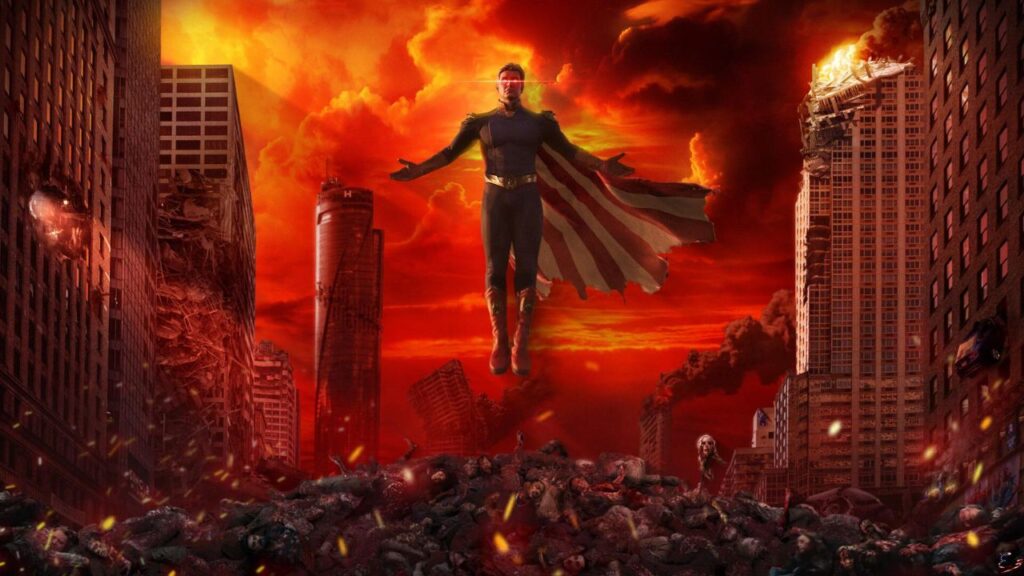
The finale opens not with action but with memory. A rapid-fire recap plays out every terrible thing Homelander has ever done, and it takes a while. It’s a catalog of atrocities so dense it feels like the show is daring you to flinch. Homelander, now juiced on a V1 compound that grants near-immortality, is preparing to declare himself a literal god on live television from the Oval Office. The stage is set for the story’s final, apocalyptic collision.
It arrives in the form of a chaotic brawl in the White House. The Boys infiltrate, but the real hero is Kimiko, whose tragic arc with Frenchie pays off in a way that is both heartbreaking and narratively ingenious. Frenchie, who died heroically in Episode 7, had, in a last-ditch experiment, exposed Kimiko to massive doses of radiation, unlocking the same power-nullifying ability that once made Soldier Boy the world’s most dangerous supe.
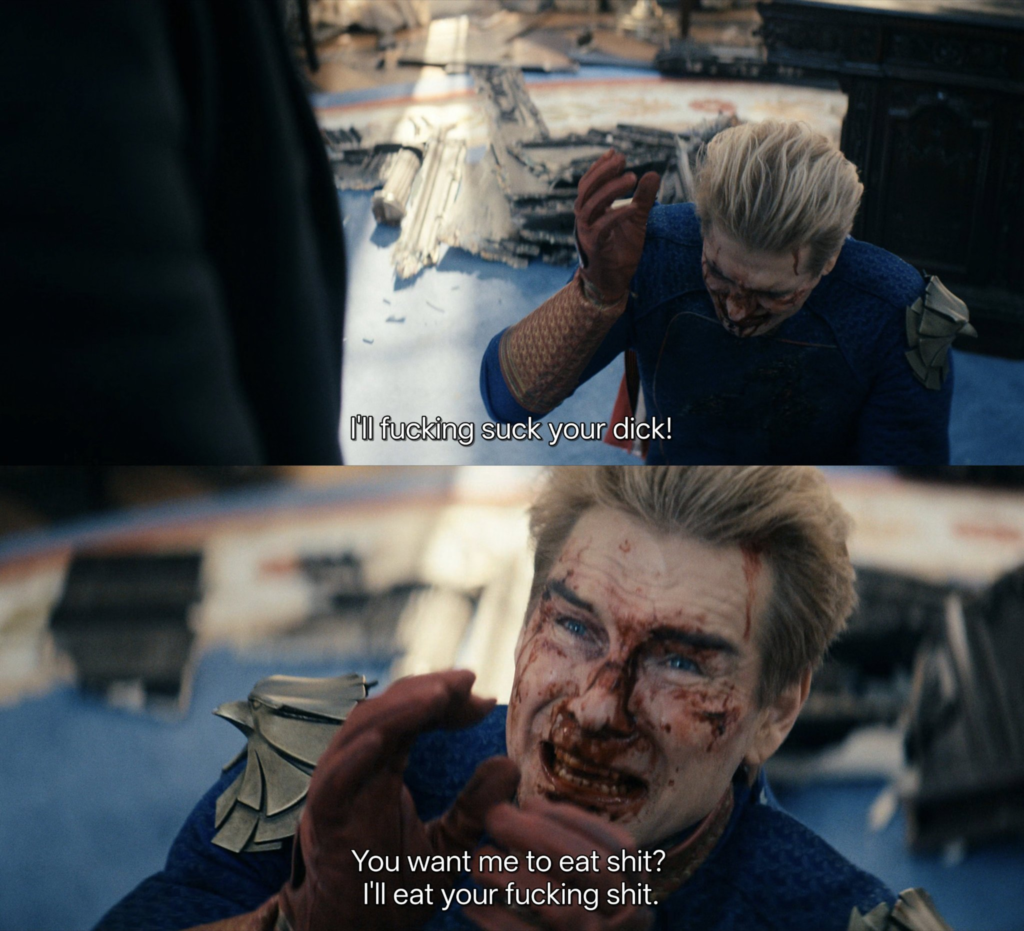
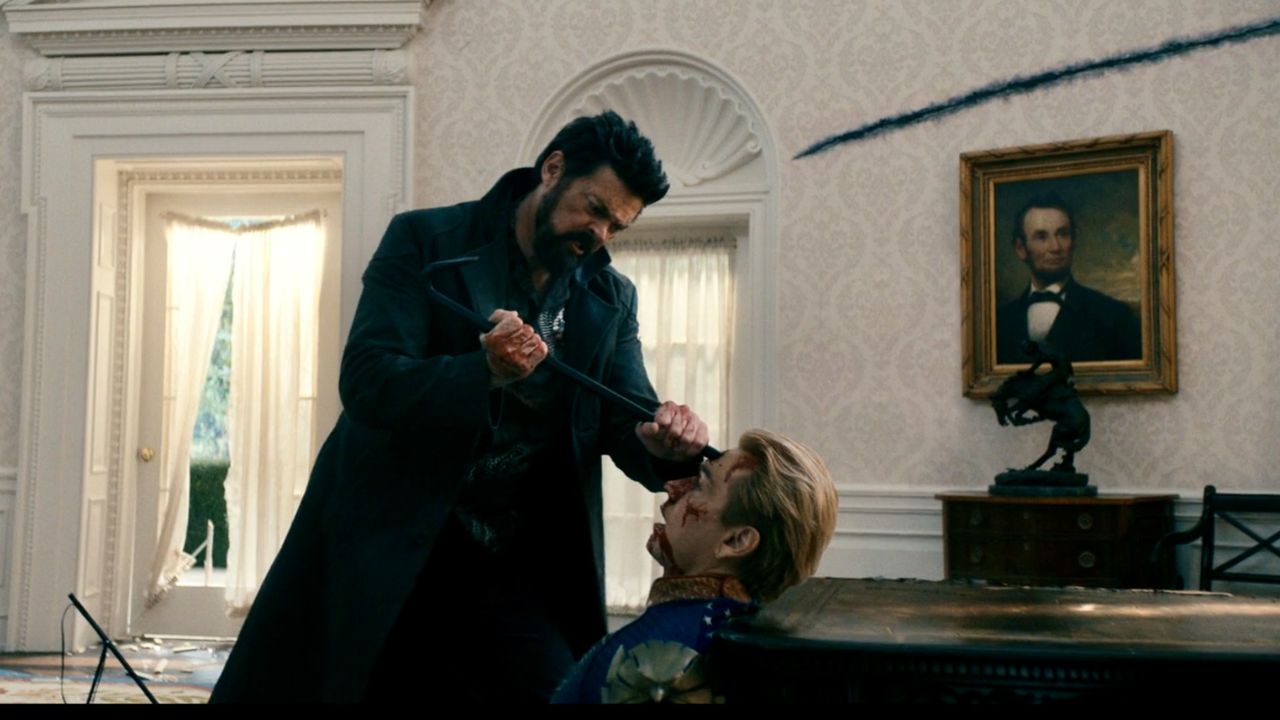
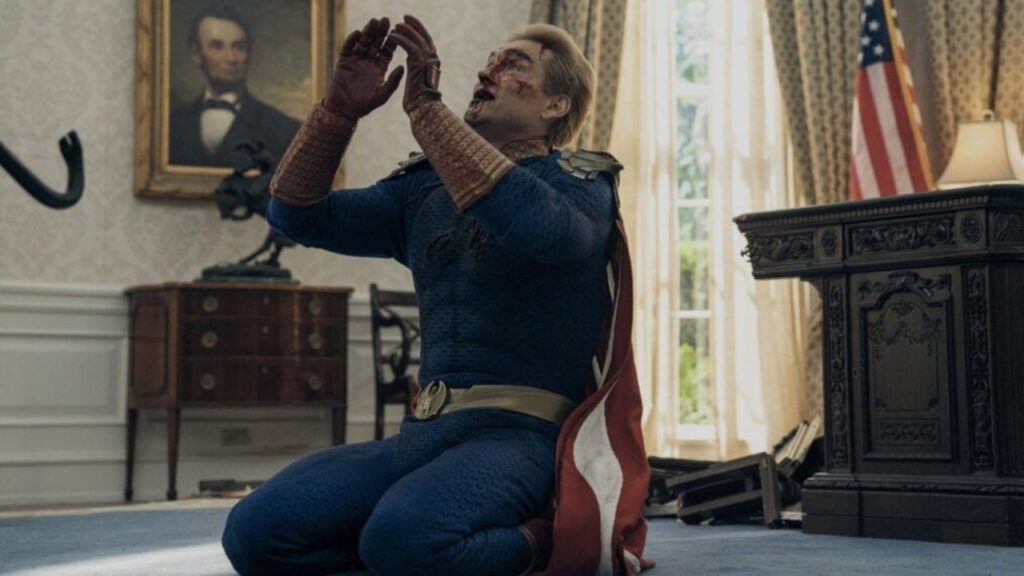
In the Oval Office, Kimiko unleashes an atomic blast that strips Homelander, Butcher, and Ryan of their powers simultaneously. Suddenly, the god is mortal. Homelander tries to fly away and just… falls. Then he begs. It is a sight we’ve waited five seasons to see: the most powerful man in the world, helpless, crying, asking for mercy.
Butcher gives none. “This is for Frenchie,” he says. Then, with the whole country watching: “This is for my Becca.” He drives a crowbar through Homelander’s skull and tears off the top. It is as brutal a death as the show has ever delivered, and it arrives only halfway through the episode.
That’s the first clue that this finale isn’t interested in victory laps. Homelander’s death is not the end; it’s the catalyst for the real tragedy.
The Second Half of The Boys Season Finale Belongs to Butcher
Convinced that as long as superheroes exist another Homelander will rise, Butcher steals the Godolkin Virus and heads to Vought Tower, intending to release it through the sprinkler system, a global supe genocide. This is the Butcher we met in the pilot: a man so consumed by vengeance that he’s become the very thing he despises.
Hughie follows him. Their fight is short, ugly, and ends with Hughie shooting his mentor in the chest. As Butcher lies dying, he tells Hughie, “It’s all right, Hughie. I gave you no choice… All the blood and shite I put you through, and none of it made a blind bit of difference. You stayed yourself, no matter what I done.”
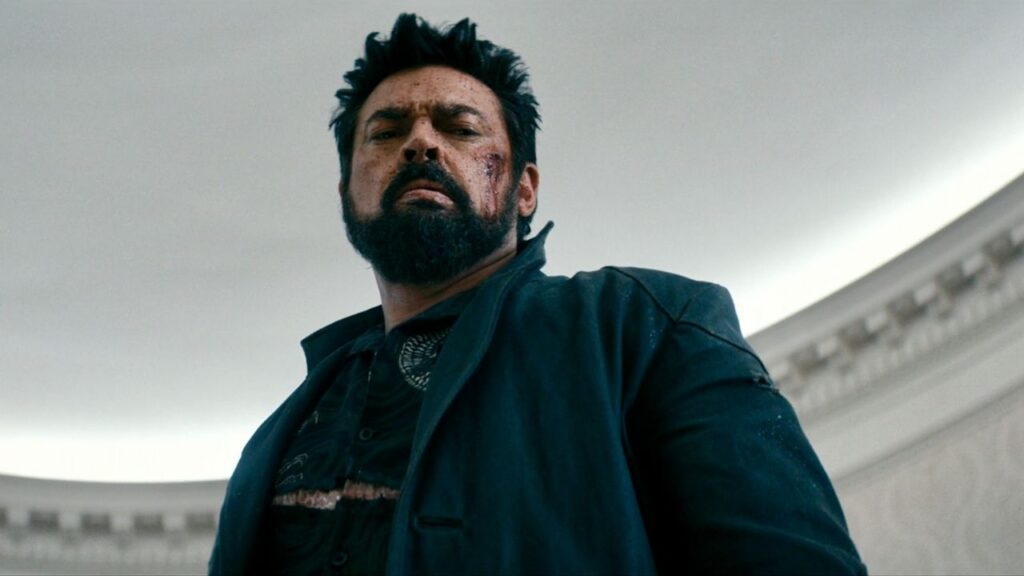
Butcher’s final gift to Hughie isn’t a mission, it’s permission to let go. Hughie weeps, holding the hand of the man who taught him that monsters can be killed but that humanity has to be chosen, again and again.
And it’s here that the finale reveals its quiet ambition. The story that began with Robin’s gruesome death in the street ends with Hughie and Annie naming their unborn daughter after her. It’s not a triumphant note; it’s a somber one, a recognition that healing is possible but never clean, and that some wounds never fully close.
The Casualties and the Survivors of The Boys Web Series
“Blood and Bone” doesn’t skimp on death. Homelander is crow-barred on live television. The Deep, lured to the beach by Starlight, is thrown into the ocean and torn apart by the very marine life he spent years exploiting – an octopus tentacle through the skull marks an end as poetically grotesque as the character deserved. Oh Father is killed by his own vocal powers when Mother’s Milk uses a bondage gag to make his head explode. And Terror, Butcher’s beloved dog, dies peacefully in his sleep – a decision Kripke defended, explaining, “That dog represented the last of his humanity, and so if that dog was going to die, Butcher’s humanity was going to die with it.”
But the finale is equally interested in the survivors. Mother’s Milk remarries his ex-wife, with Ryan as his best man. Kimiko moves to France to honor Frenchie, quietly living in a café in Marseilles. Hughie and Annie open an electronics shop that doubles as a front for Starlight’s independent superhero work – a fragile, mundane peace. Hughie is offered the chance to run the newly reinstated Bureau of Supe Affairs. He turns it down.
In the final scene, President Singer calls Hughie, but the hero who once dreamed of making a difference chooses instead to go home. It’s a rejection of institutional power that feels entirely earned – and utterly melancholy.
What It All Means (or Doesn’t) in The Boys Season 5
The Boys has always been a show about the impossibility of doing good in a world designed to reward the opposite. Its finale refuses to give us the catharsis of a clean victory. Instead, it offers something more complicated: an acknowledgment that justice is provisional, that the systems that enable abuse remain intact, and that the only real choice we have is how we live with each other.
Fans who expected a triumphant, crowd-pleasing climax may feel betrayed. There’s validity in that complaint. The decision to turn Homelander “immortal” in Episode 6 and kill him two episodes later does feel rushed, and the season’s pacing has been criticized as uneven. One viewer posted, “I told you we were in for another Arya Stark moment,” referencing the Game of Thrones scene where the Night King was killed by a character with no narrative connection to him. The critique stings because it’s partially true: Kimiko’s power-up, while emotionally motivated by Frenchie’s death, arrives with little foreshadowing.
But to dismiss the finale as a failure is to miss what it’s actually doing. Kripke and his writers are less interested in who wins than in who remains. The final image isn’t of a superhero standing tall but of Hughie walking away from power, choosing the small, human life he nearly lost. That’s a radical statement for a show that once opened with a man being vaporized.
Roger Ebert once wrote, “Movies are like a machine that generates empathy.” The Boys finale, for all its blood and cynicism, manages to do exactly that. It asks us to feel for a genocidal bully in his final moments, to understand the grief that drives Butcher over the edge, and to believe that Hughie’s refusal to become a killer is a victory, not weakness. Whether that’s enough depends on what you came to the show for.
The Future of the Franchise Starts With Vought Rising
There will be no Season 6. Kripke has been firm on that, explaining that the story always had a five-season arc. Instead, the universe expands with Vought Rising, a prequel series set in the 1950s that will explore the origins of Vought International, featuring Soldier Boy (Jensen Ackles) and Stormfront (Aya Cash). Another spin-off, The Boys: Mexico, is also in development, though plot details remain under wraps.
Soldier Boy’s fate remains one of the finale’s few loose ends. After Homelander choked him unconscious and returned him to a cryochamber in Episode 7, the character simply doesn’t appear in the finale. His ambiguous status, neither dead nor alive, feels like a thread left dangling for that prequel.
But the story of Billy Butcher and Homelander is definitively over. And in the end, they both get what they wanted: Homelander becomes a martyr, his final humiliation broadcast worldwide, and Butcher gets to join his wife. It’s just not how either of them planned it.
The Boys Season 5 finale is messy, divisive, and occasionally brilliant. It’s a conclusion that understands the difference between ending a story and ending a world. Whether you find it satisfying will depend on your tolerance for ambiguity and your willingness to accept that sometimes the most honest answer to a lifetime of violence is not a punchline but a long, uncomfortable silence.
For my money, it earns its place as one of the more thoughtful, if imperfect, series finales of the streaming era. It remembers that the title has always been a lie: no one is a “boy” anymore. They’re just people, trying to figure out what to do with the blood on their hands.
What did you think of The Boys finale? Share your thoughts in the comments. All episodes of The Boys are now streaming on Prime Video.